Automatic Transmission - 10L80 MHS MQC | Diagnostic Information and Procedures | Document ID: 4491701
Torque Converter Stator
The torque converter stator roller clutch can have 2 different malfunctions.
The stator assembly freewheels in both directions.
The stator assembly remains locked up in both directions.
Poor Acceleration at Low Speed – Stator Roller Clutch Freewheels at All Times
If the stator is freewheeling at all times, the vehicle tends to have poor acceleration from a
standstill and at speeds below 48–55 km/h (30–34 mph). At speeds above 48–55 km/h (30–34
mph), the vehicle may act normally.
For poor acceleration at low speeds, you should first determine that the exhaust system is not
blocked, and the transmission is in First gear when starting out. If the engine freely accelerates to
high RPM in NEUTRAL, you can assume that the engine and the exhaust system are normal.
Check for poor performance in DRIVE and REVERSE to help determine if the stator is freewheeling
at all times.
Poor Acceleration at High Speed – Stator Roller Clutch is Locked Up at All Times
If the stator is locked up at all times, performance is normal when accelerating from a standstill.
Engine RPM and vehicle speed are limited or restricted at speeds above 48–55 km/h (30–34 mph).
Visual examination of the converter may reveal a blue color from overheating.
Torque Converter Bearing Noise
Place your foot on the brake.
Put the gear selector in DRIVE.
Depress the accelerator to approximately 1,200 RPM for no more than six seconds.
A torque converter noise will increase under this load.
Torque Converter Clutch
The torque converter clutch (TCC) is applied by fluid pressure, which is controlled by a TCC
pressure control (PC) solenoid. This solenoid is part of the control solenoid valve assembly, which
is located inside the automatic transmission assembly. The solenoid is controlled through a
combination of computer controlled switches and sensors. Electronically controlled capacity clutch
(ECCC) is controlled slip across the TCC.
Torque Converter Clutch Shudder
The key to diagnosing torque converter clutch (TCC) shudder is to note when it happens and
under what conditions. TCC shudder should only occur during the apply, release, or ECCC
conditions of the converter clutch. Shudder should never occur after the TCC is fully locked
(approximately 0 RPM slip).
If Shudder Occurs During TCC Apply, Release, and ECCC
If the shudder occurs while the TCC is applying, the problem can be within the transmission or the
torque converter. Something is causing one of the following conditions to occur:
The clutch is not engaging completely.
The clutch is not releasing completely.
The clutch is releasing and applying rapidly and continuously.
One of the following conditions may be causing the TCC Shudder to occur:
Leaking turbine shaft/TCC seals
A restricted release orifice
A distorted clutch or converter cover due to long flexplate to converter bolts
Defective friction material on the TCC plate
Contaminated Transmission Fluid
If Shudder Occurs After TCC has Locked
Engine problems may go unnoticed under light throttle and load, but they become noticeable after
the TCC has locked when going up a hill or accelerating.
Refer to Symptoms – Engine Controls in order to avoid misdiagnosis of TCC shudder and the
unnecessary disassembly of a transmission or the unnecessary replacement of a torque converter.
Torque Converter Vibration Test
With the engine at idle speed and the transmission in PARK or NEUTRAL, observe the
vibration.
Turn the engine OFF.
Raise and suitably support the vehicle. Refer to Lifting and Jacking the Vehicle.
Remove the torque converter access cover and the bolts (if equipped).
Mark the relationship of the torque converter to the flexplate.
Rotate the torque converter to inspect for defects or missing balance weights.
Index the converter according to “Indexing Torque Converter” procedure located within this
procedure.
If the vibration remains, it is most likely caused by the engine.
Refer to “Torque Converter Replacement Guide” located within this procedure.
Indexing Torque Converter
To determine and correct a torque converter vibration, the following procedure may have to be
performed several times to achieve the best possible torque converter to flexplate balance.
Remove the torque converter bolts.
Rotate the torque converter one bolt position from the original marked position.
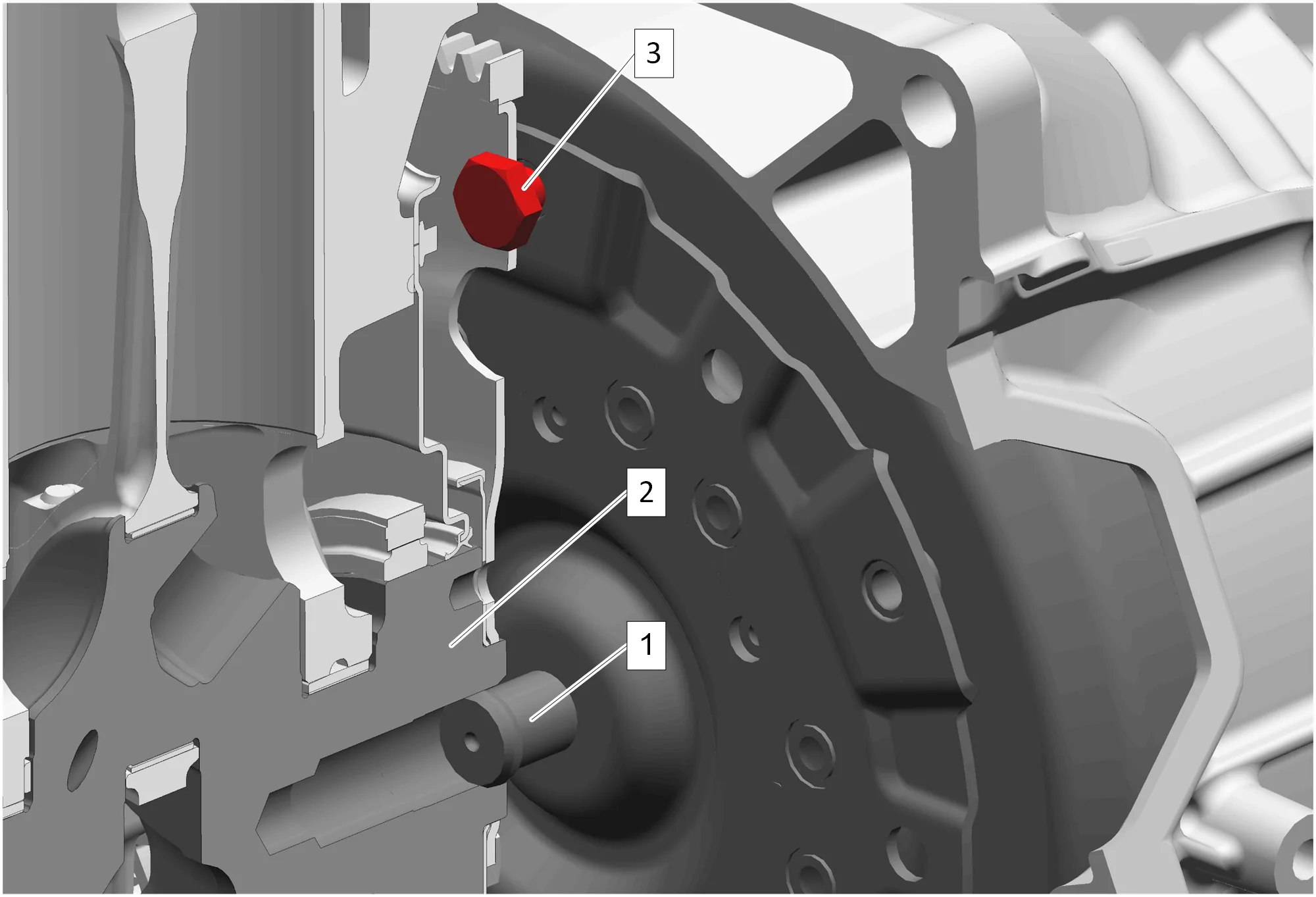
Torque Converter Diagnosis — figure 1
Align the torque converter pilot (1) in the engine crankshaft (2). Install the torque converter to
flexplate bolts (3), and tighten according to Fastener Specifications.
Lower the vehicle.
With the engine at idle speed and the transmission in PARK or NEUTRAL, observe the
vibration.
Repeat this procedure until the best possible balance is obtained.
Install the torque converter access cover and bolts (if equipped) and tighten according to
Fastener Specifications.
Torque Converter Replacement Guide
Condition
Action
Transmission Fluid Oxidized/Discolored Clutch Fiber Material
Do not replace the torque converter. Refer to Transmission Fluid Level and Condition Check.
Condition
Action
Transmission Fluid Contaminated with Metal Particles
Do not replace the torque converter for clutch system or gearset component damage. Fine metallic debris or clutch plate material that is suspended in the fluid will not cause damage to the internal torque converter components nor any internal transmission components.
Harsh Gear Shifts
Do not replace the torque converter. Refer to Symptoms - Automatic Transmission.
Noise–Whine
Refer to Symptoms - Automatic Transmission. Do not replace the torque converter if noise is present in Neutral/Park. Refer to Symptoms – Engine Mechanical.
Vibration–Out of Balance
Refer to Torque Converter Vibration Test in this procedure.
No Drive/Slips in Drive
Do not replace the torque converter until completing all engine and transmission diagnostics.
Idle Surge/Rough Idle
Do not replace the torque converter. Refer to Symptoms – Engine Controls.
TCC Apply/Release Shudder
Do not replace the torque converter. Refer to Torque Converter Clutch Shudder in this procedure.
TCC Chuggle
Do not replace the torque converter. Refer to Symptoms – Engine Controls.
Transmission Fluid Contaminated with Sludge/Metal Particles as a result of: Engine Coolant/Oil Pump damage Drive sprocket support damage Turbine/stator shaft damage Internal converter damage with no damage found in the transmission
Replace the torque converter.
Poor Acceleration above 48 km/h (30 mph) – Good Launch
Do not replace the torque converter until completing all engine and transmission diagnostics. Refer to Torque Converter Stator in this
Poor Launch – Good Acceleration above 48 km/h (30 mph)
Do not replace the torque converter until completing all engine and transmission diagnostics. Refer to Torque Converter Stator in this procedure. Refer to Symptoms – Engine Controls.
Stripped Converter Bolt Holes
Replace the torque converter. Inspect flexplate.
Torque Converter Pilot Damaged
Replace the torque converter.
Torque Converter Hub surface is damaged – scored, raised/transferred metal.
Replace the torque converter.
External Leaks in the weld areas – hub, lug or closure weld.