Intake Airflow Valve System Description
Engine Controls and Fuel - 3.0L LM2 Diesel | Description and Operation | Document ID: 4009030
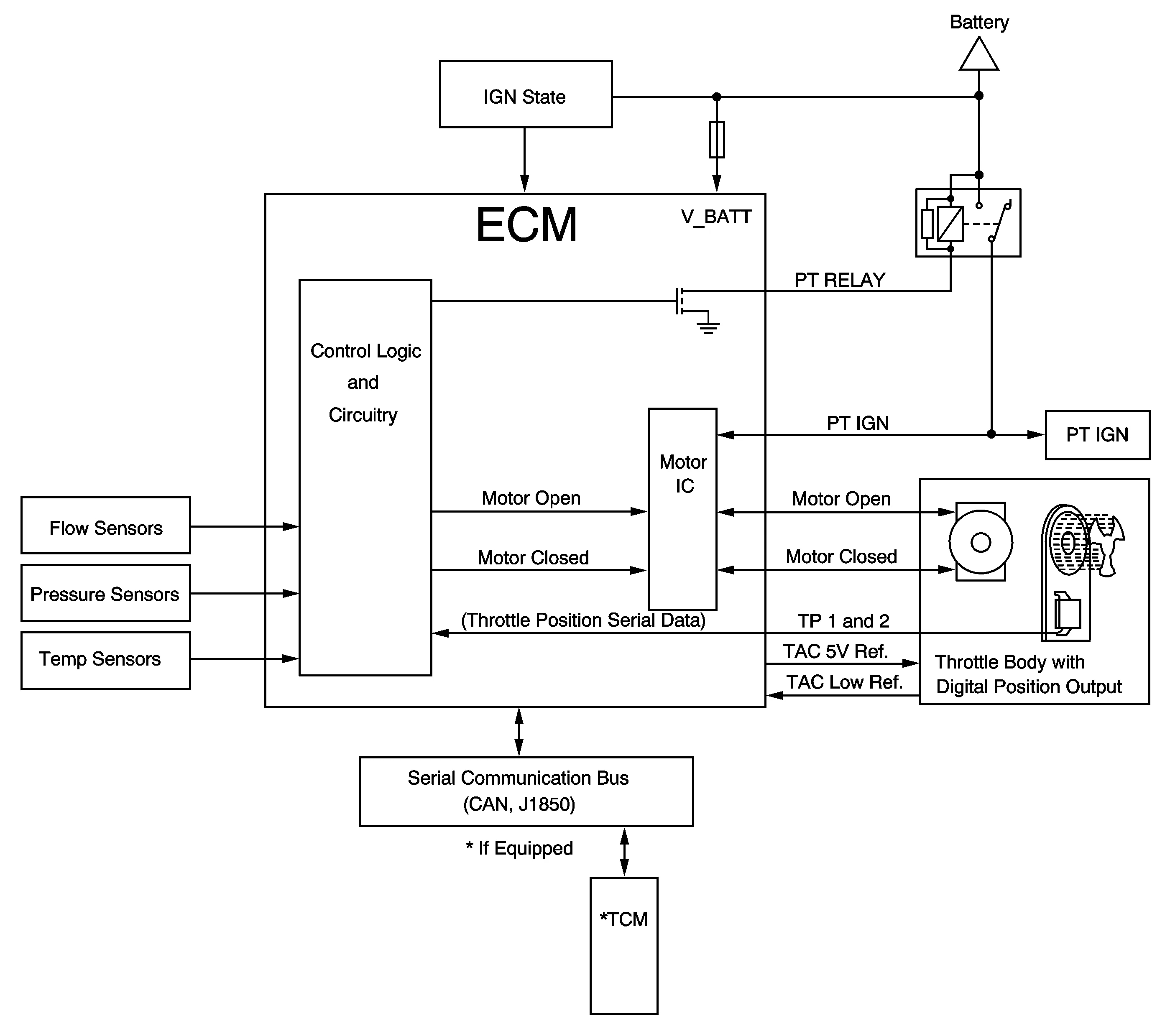
The intake air flow valve actuator is used to achieve high exhaust gas recirculation rates. It increases the pressure difference between exhaust and intake so that the appropriate exhaust quantity can be mixed with the intake air. The intake air flow valve contains a contact-less inductive valve position sensing element that is managed by a customized integrated circuit. The intake air flow valve position sensor is mounted within the valve assembly and is not serviceable. The engine control module (ECM) supplies the valve assembly with a 5 V reference circuit, a low reference circuit, an H-bridge motor directional control circuit, and an asynchronous signal/serial data circuit. The asynchronous signal means communication is only going from the valve assembly to the ECM. The valve assembly cannot receive data from the ECM over the signal/serial data circuit. The intake air flow valve position sensor provides a signal that changes relative to air flow blade angle. The customized integrated circuit translates the signal based position information into serial data using the Society of Automotive Engineers (SAE) J2716 Single Edge Nibble Transmission (SENT) protocol. The intake air flow valve position sensor information is transmitted between the valve assembly and the ECM on the signal/serial data circuit. The ECM decodes the serial data signal into a voltage which is displayed on a scan tool as intake air flow valve position sensor.